· News
Sebastião Salgado in Bassano del Grappa. Taking Time to Look
When I visit a photography exhibition, I like to return to a print after reading the text on the wall. The image catches my eye the first time. On a second look, I start asking where the photographer stood, what they waited for and why they framed the scene that way. That was how I approached Sebastião Salgado’s exhibition at the Civic Museum of Bassano del Grappa.
Curated by Pascal Hoël, the exhibition brings together more than 160 photographs from the Maison Européenne de la Photographie (MEP) in Paris. It follows Salgado from his first photographs through his work on labour, war and migration, before turning to Genesis.
How the exhibition is organised
The museum presents the work in two sections. The first follows the opening twenty-five years of Salgado’s career in chronological order. The second is devoted to Genesis, a project developed over more than seven years. Exhibition guide from the Civic Museums of Bassano del Grappa.
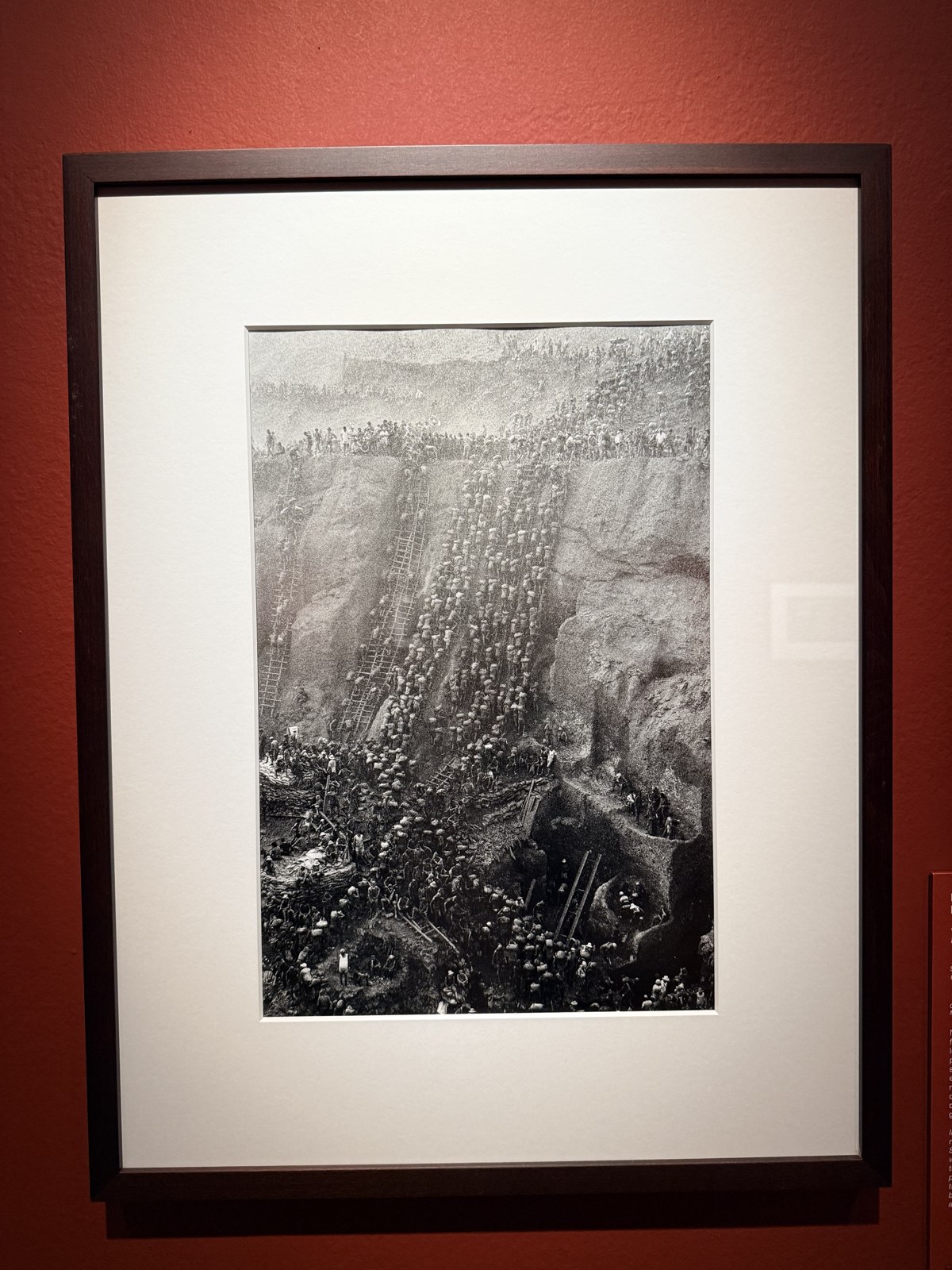
First section. After the early photographs, Other Americas looks at rural communities in Latin America, while Sahel documents the effects of famine. Serra Pelada Gold Mine – Brazil follows the work at the Brazilian gold mine, and Workers widens the scope to manual labour in several countries. Kuwait follows the crews putting out oil well fires. In Exodus the focus shifts to migration, and in Children of the Exodus it settles on the faces of children forced to flee.
Second section. Genesis takes in landscapes, wildlife and communities in remote regions. The Planet South chapter, with its seas, icebergs and southern wildlife, is one way the project conveys the beauty and fragility of these environments.
The early photographs, from economics to reportage
The account of Salgado’s beginnings caught my attention. He had studied economics and began taking photographs while travelling in Africa for the International Coffee Organization. He used a Pentax Spotmatic II that Lélia Deluiz Wanick, his partner in life and work, had used for her architecture studies. He devoted himself to photography from 1973, moving from weddings and photojournalism into long-term documentary projects.
Workers and war in the red galleries
In the series on labour, from Serra Pelada to Workers, the framing holds together the effort of individual workers and the scale of their surroundings. The Kuwait display describes the oil well fires of the first Gulf War in 1991. In the photographs, workers appear tiny beside the flames. The space those figures occupy in the frame shows how much the photographer’s distance can change the story.
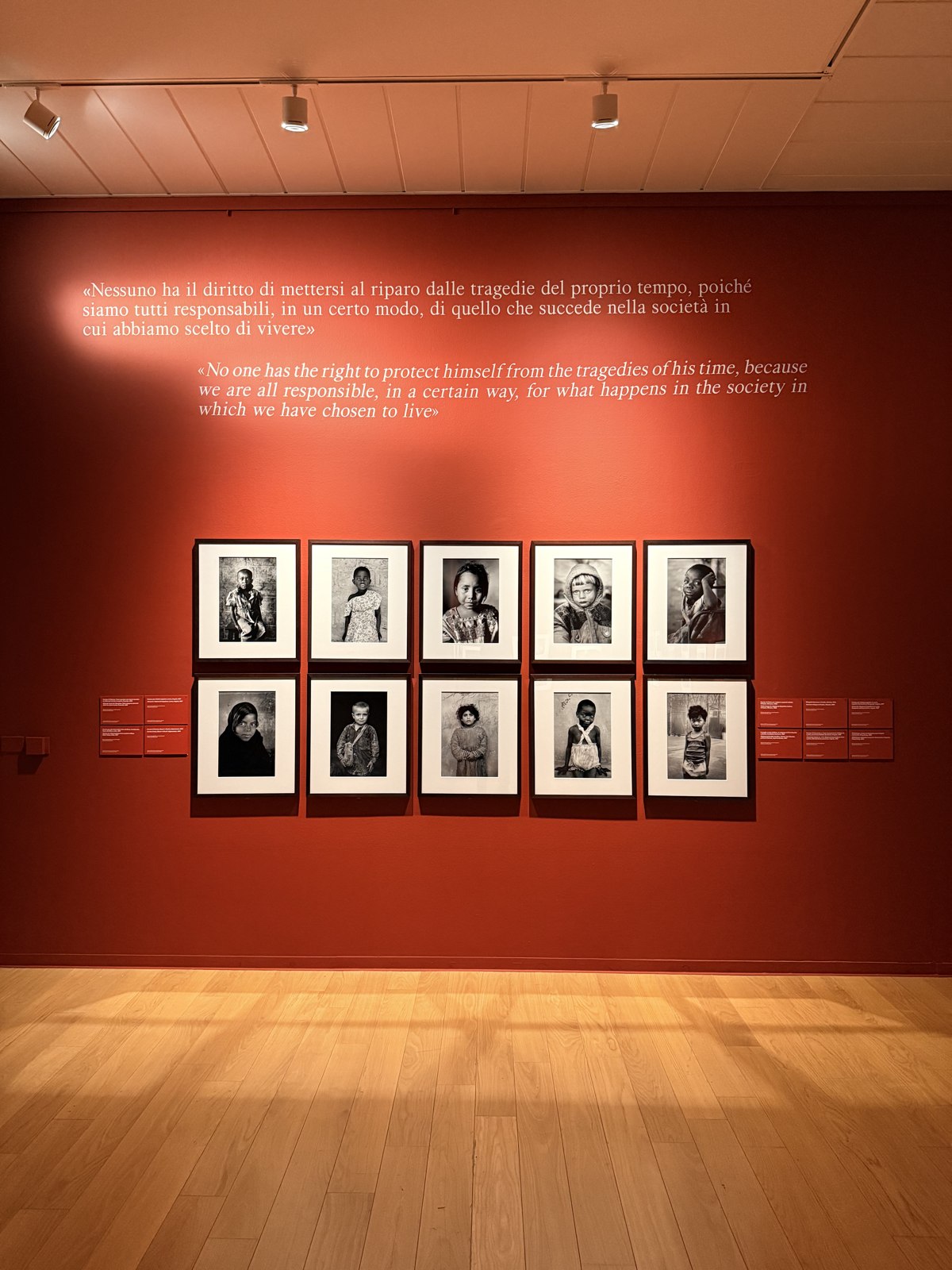
Children of the Exodus
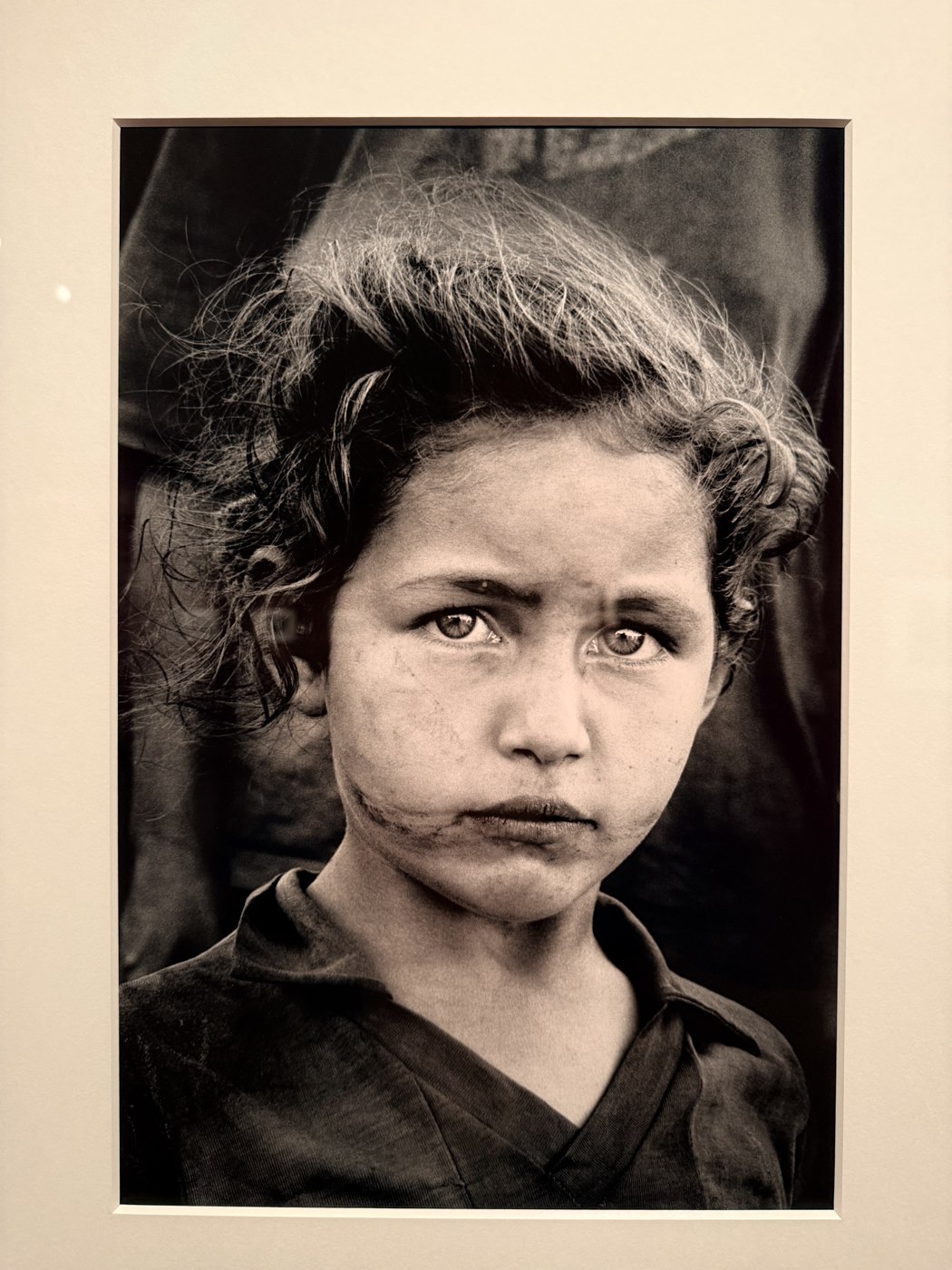
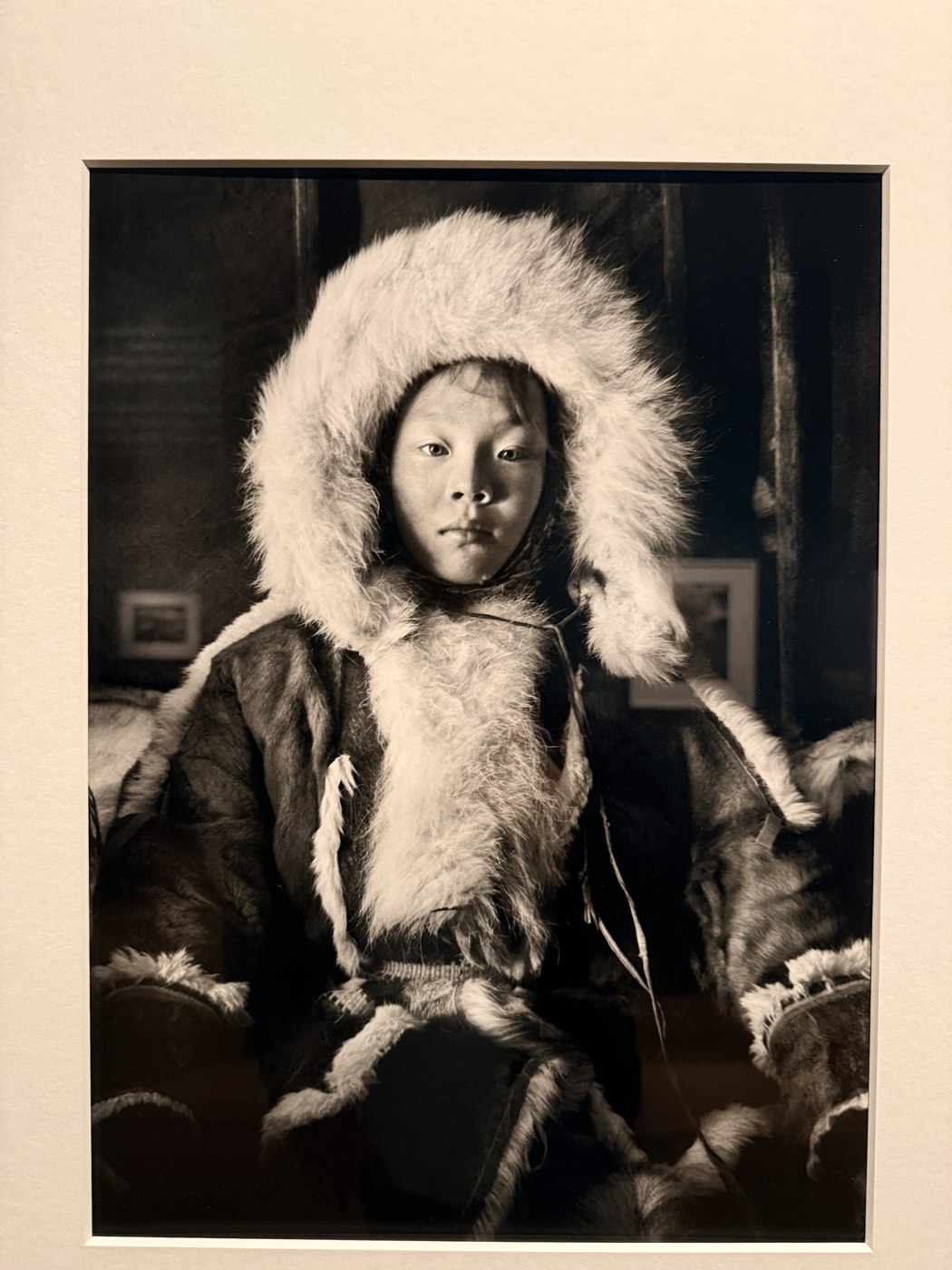
The panel for Children of the Exodus describes how children forced to flee would laugh and play together. When Salgado took their portraits, many looked into the lens with unexpected seriousness. Knowing what happened before the shutter was released makes me return to those faces and spend longer with them.
Salgado is still one of my favourite photographers for his use of black and white, the precision of his framing and, above all, the way he captures the person in a portrait. A gesture, the position of the shoulders or the direction of a gaze can give me a sense of the person in front of his camera.
Genesis, from reforestation to Planet South
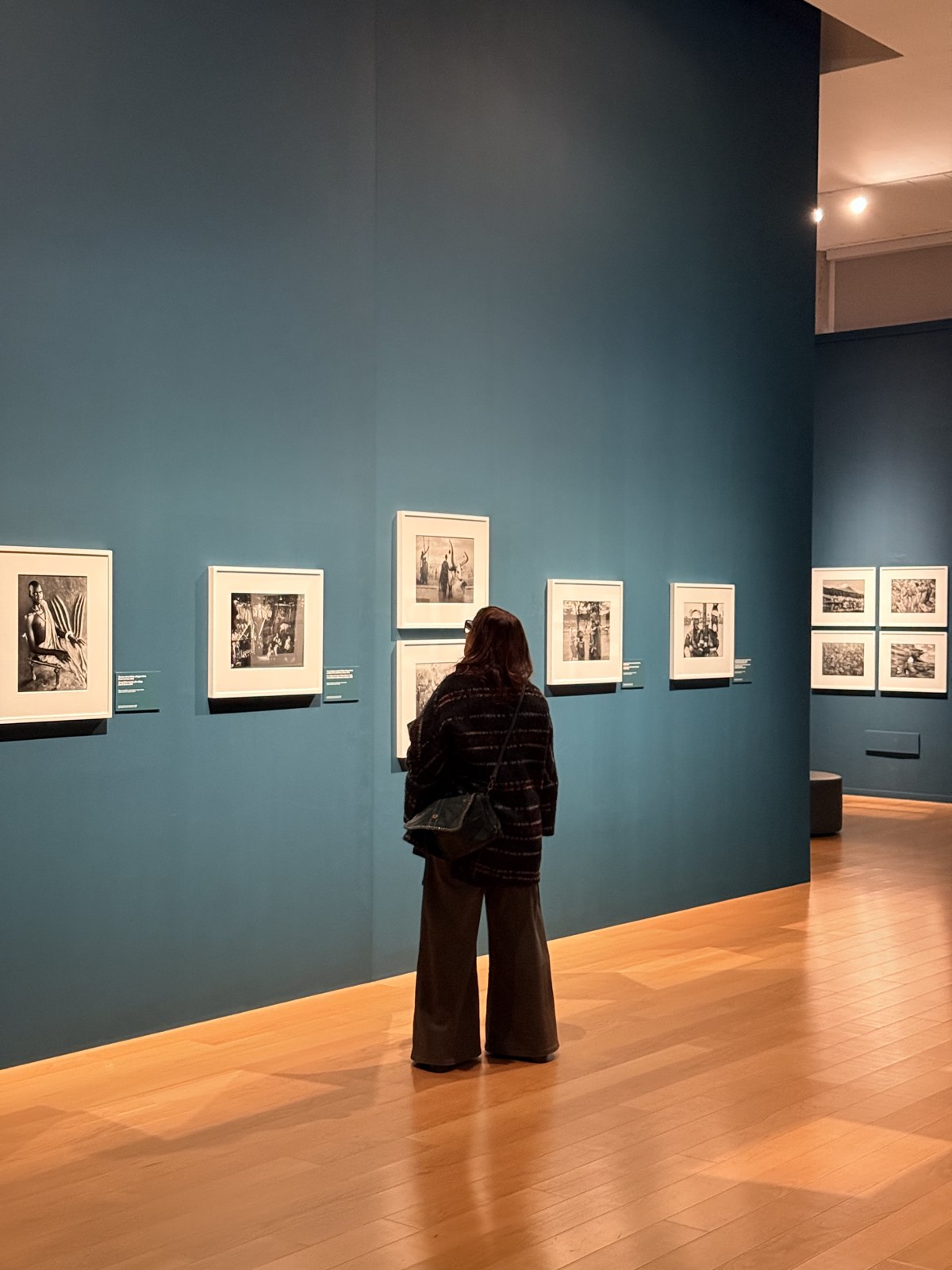
In the blue galleries, the Genesis panel traces the project back to a specific experience. In Brazil’s Rio Doce valley, Sebastião and Lélia worked to reforest the family property. Seeing life return to land damaged by deforestation inspired the project, which took Salgado from the Galápagos to the Amazon and from Africa to the polar regions between 2004 and 2012.
The Planet South panel describes the weeks he spent off Argentina photographing southern right whales and his voyage among the icebergs of the Weddell Sea. Those details give a sense of the time and preparation behind the photographs we see together on the gallery wall.
Why photography exhibitions are worth visiting
Every photography exhibition is a chance to understand how the person behind the camera thinks. I can move closer to a print to study a detail and then step back to see how it fits into the frame. I can also see how one photograph changes when I view it next to the following one. It is something I take with me when I go back to making photographs.
Where and when to visit
Sebastião Salgado. Photographs from the collection of the Maison Européenne de la Photographie, Paris
Civic Museum of Bassano del Grappa
24 October 2026 to 4 April 2027
Curated by Pascal Hoël.
For opening hours, tickets and guided tours, see the official exhibition page. This article draws on the wall texts photographed during my visit.